Self-hosted AI coding workspace
Ox Coder
A self-hosted AI coding workspace with explicit model choice, automatic task routing, trusted tools, multimodal input, and persistent chat.
- Project
- Independent open-source product
- Role
- Product design, AI systems architecture, full-stack engineering, deployment, and testing
- Focus
- AI coding agent, Tool use, Multimodal chat, Open source
- Stack
- Next.js 16, React 19, TypeScript, OpenRouter, Auth.js, PostgreSQL, AI SDK MCP, Zod, Vitest, Tailwind CSS 4, Render
The project
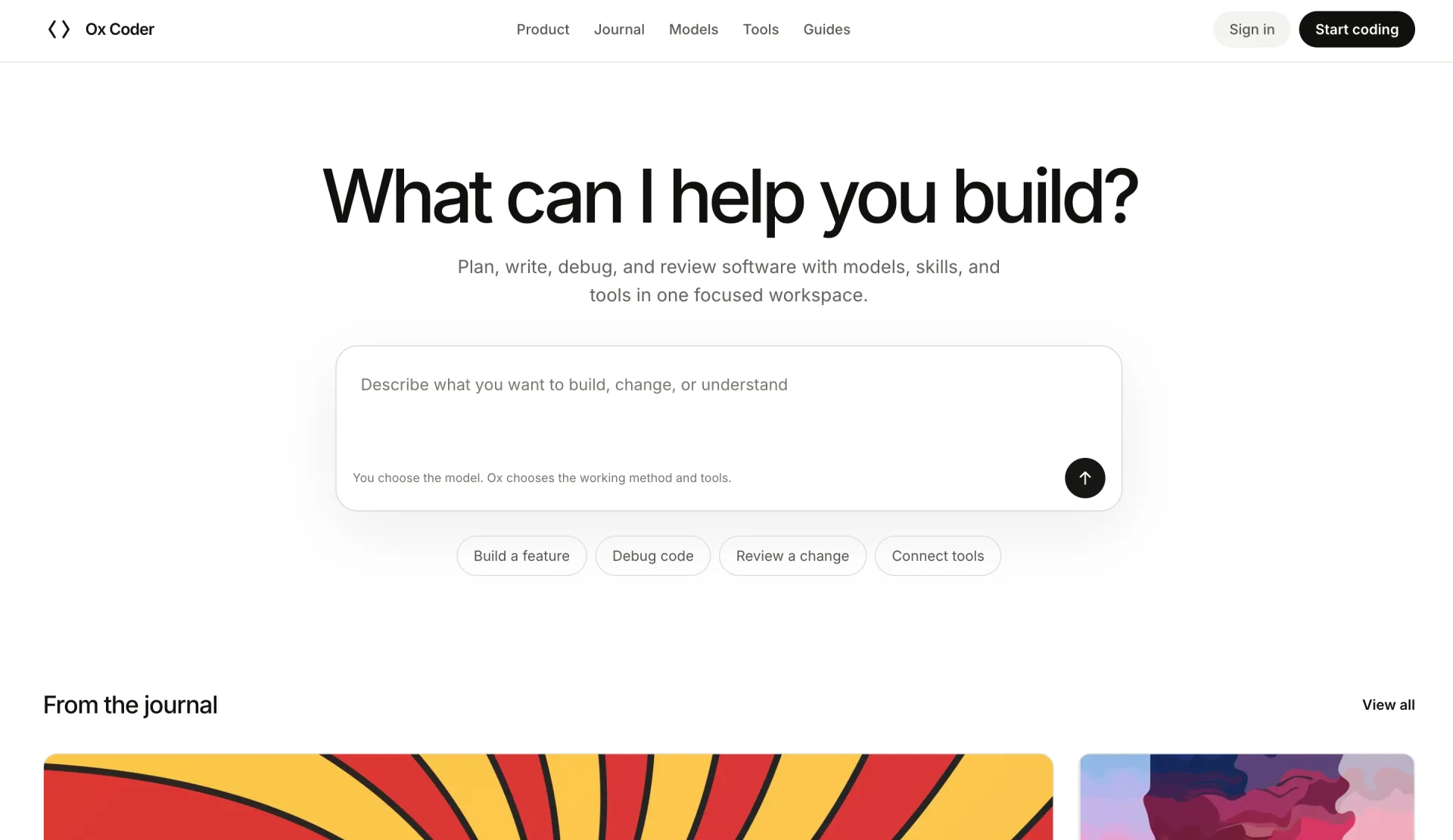
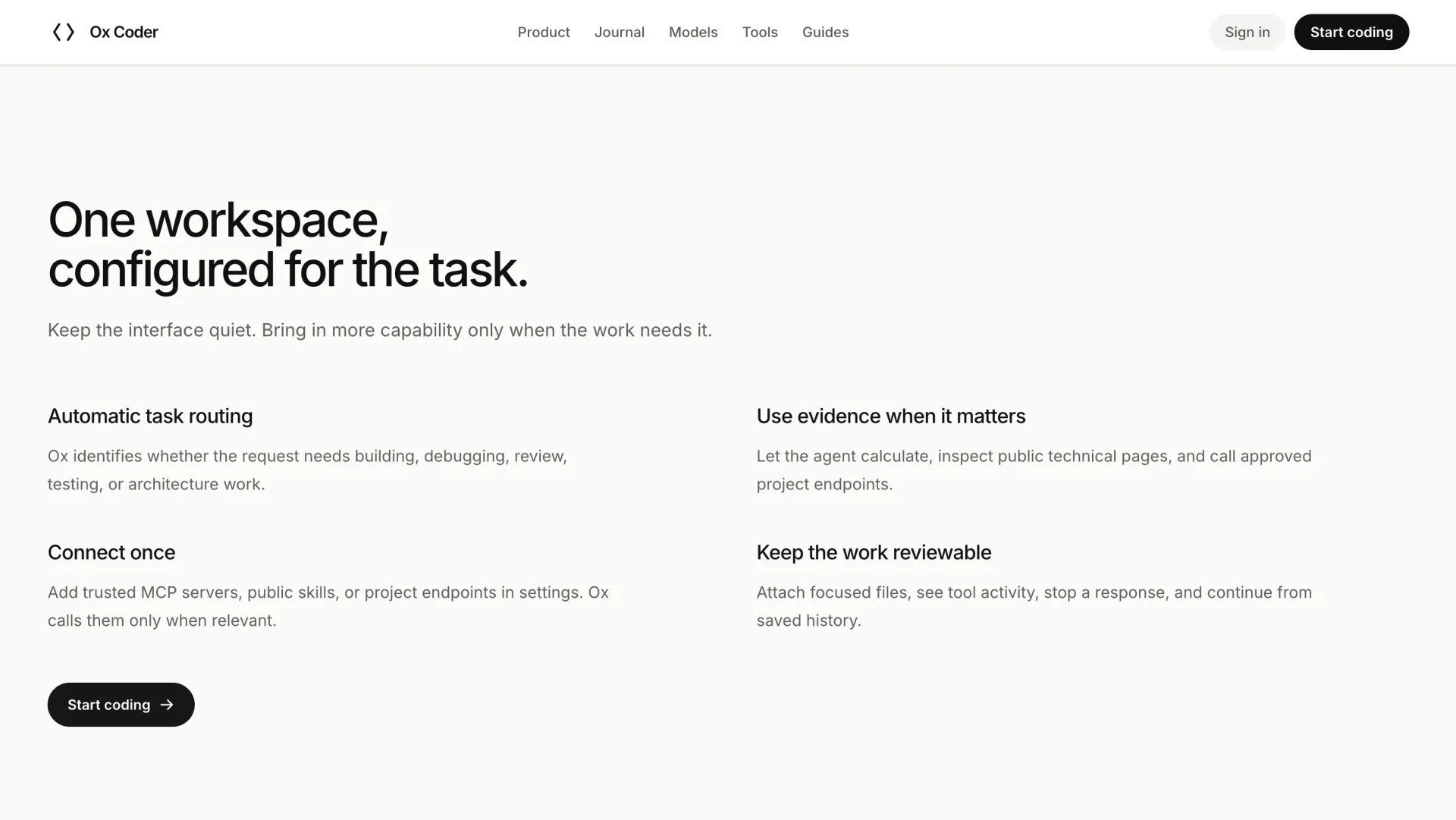
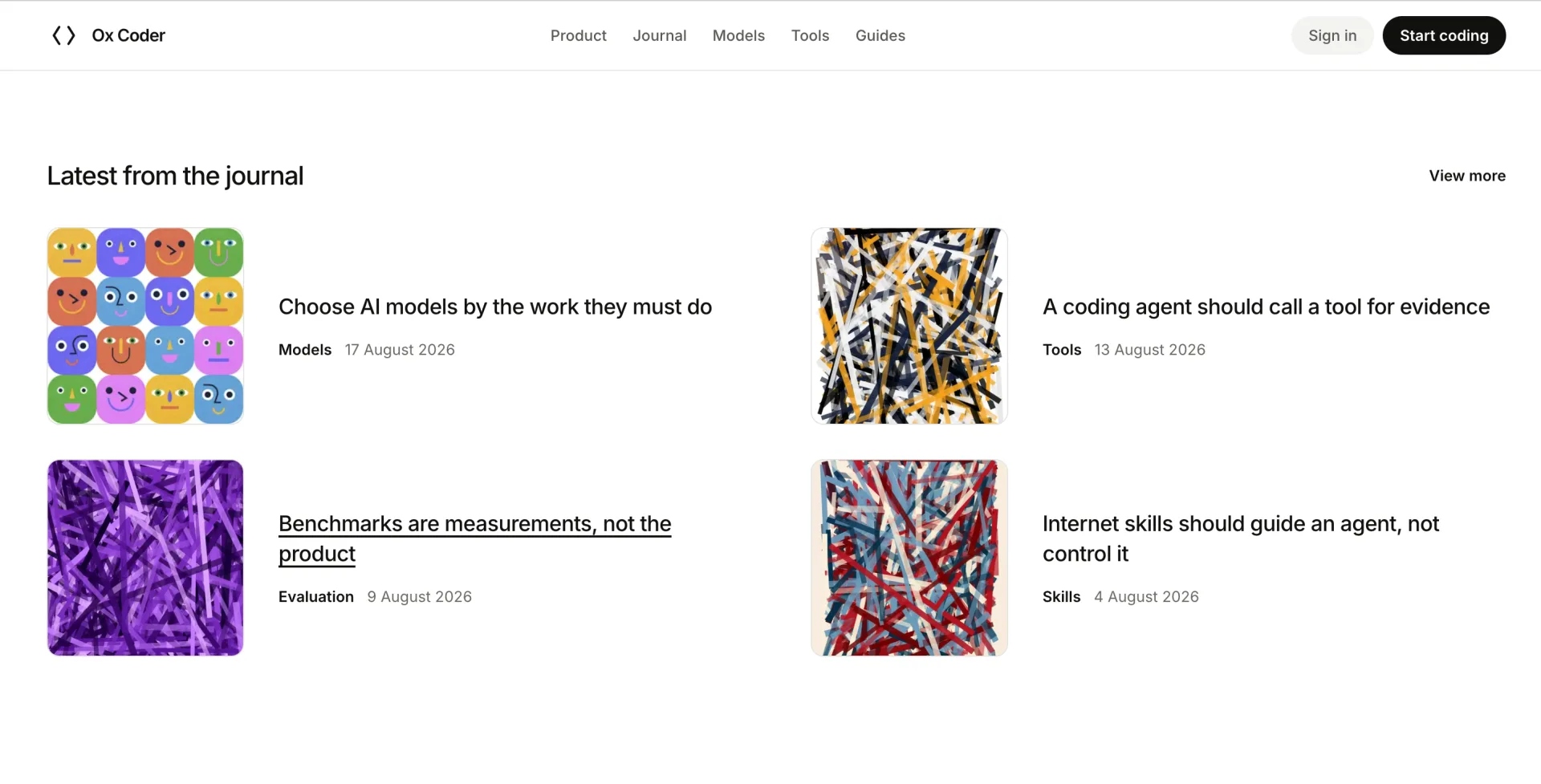
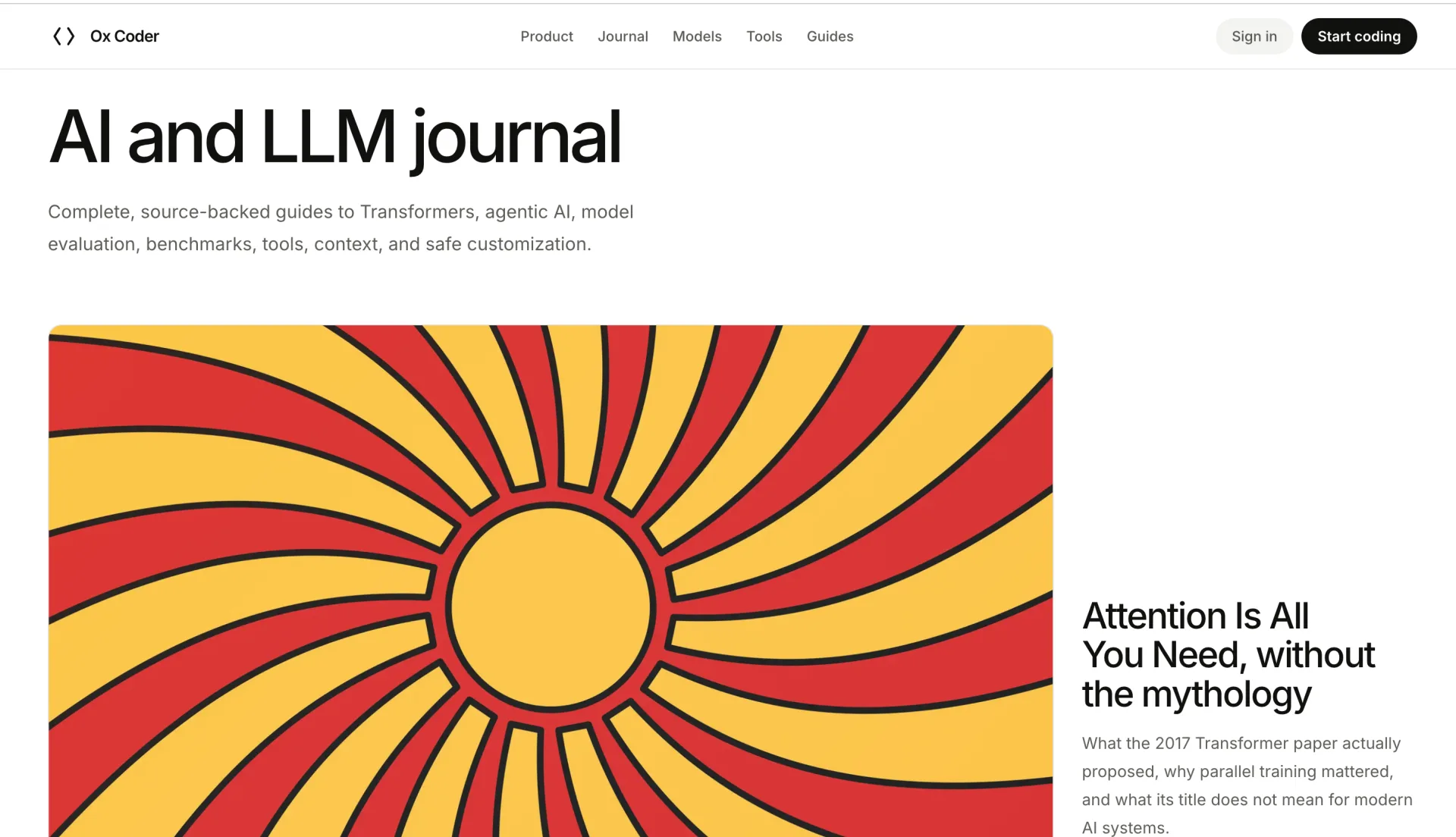
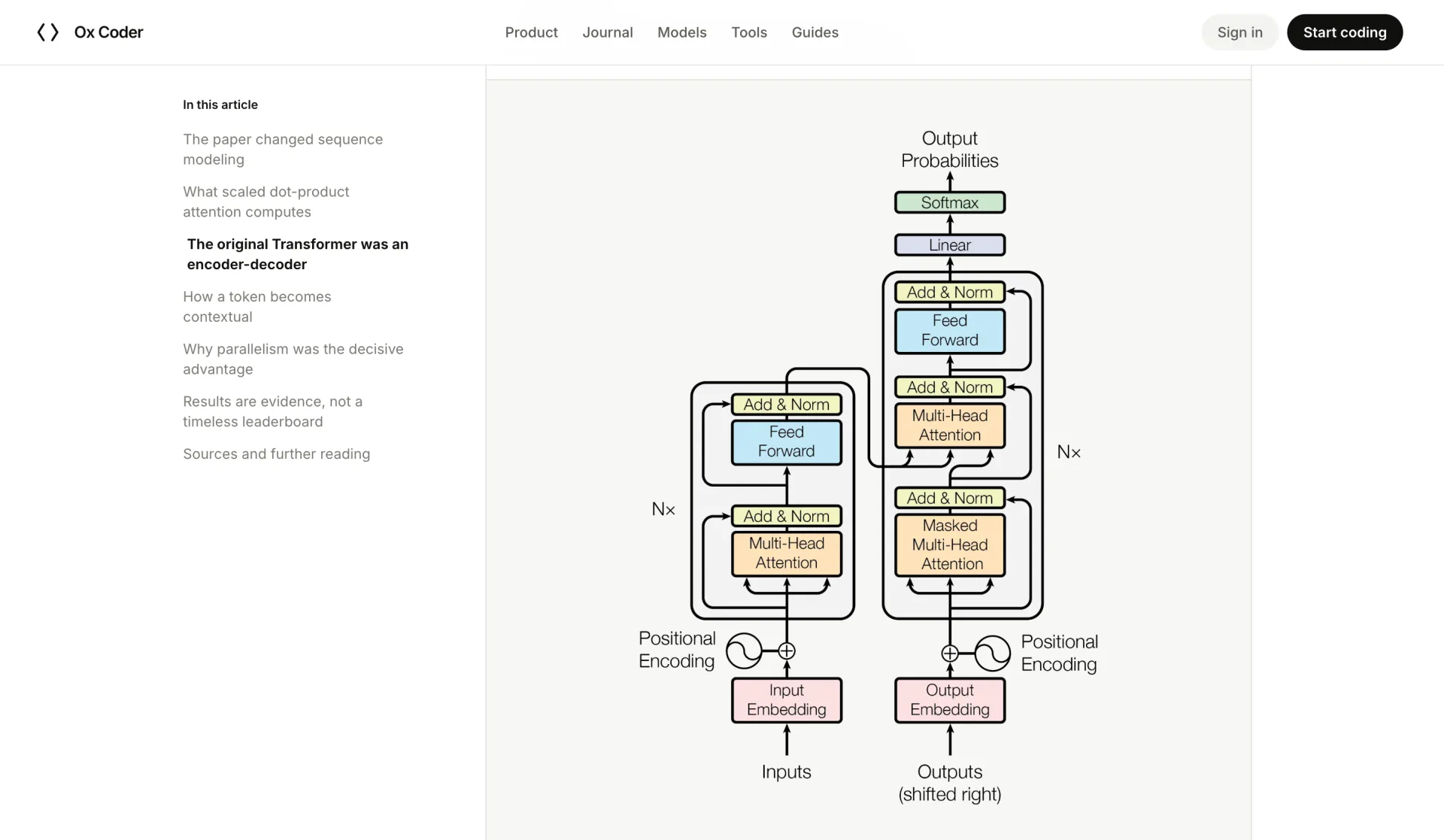
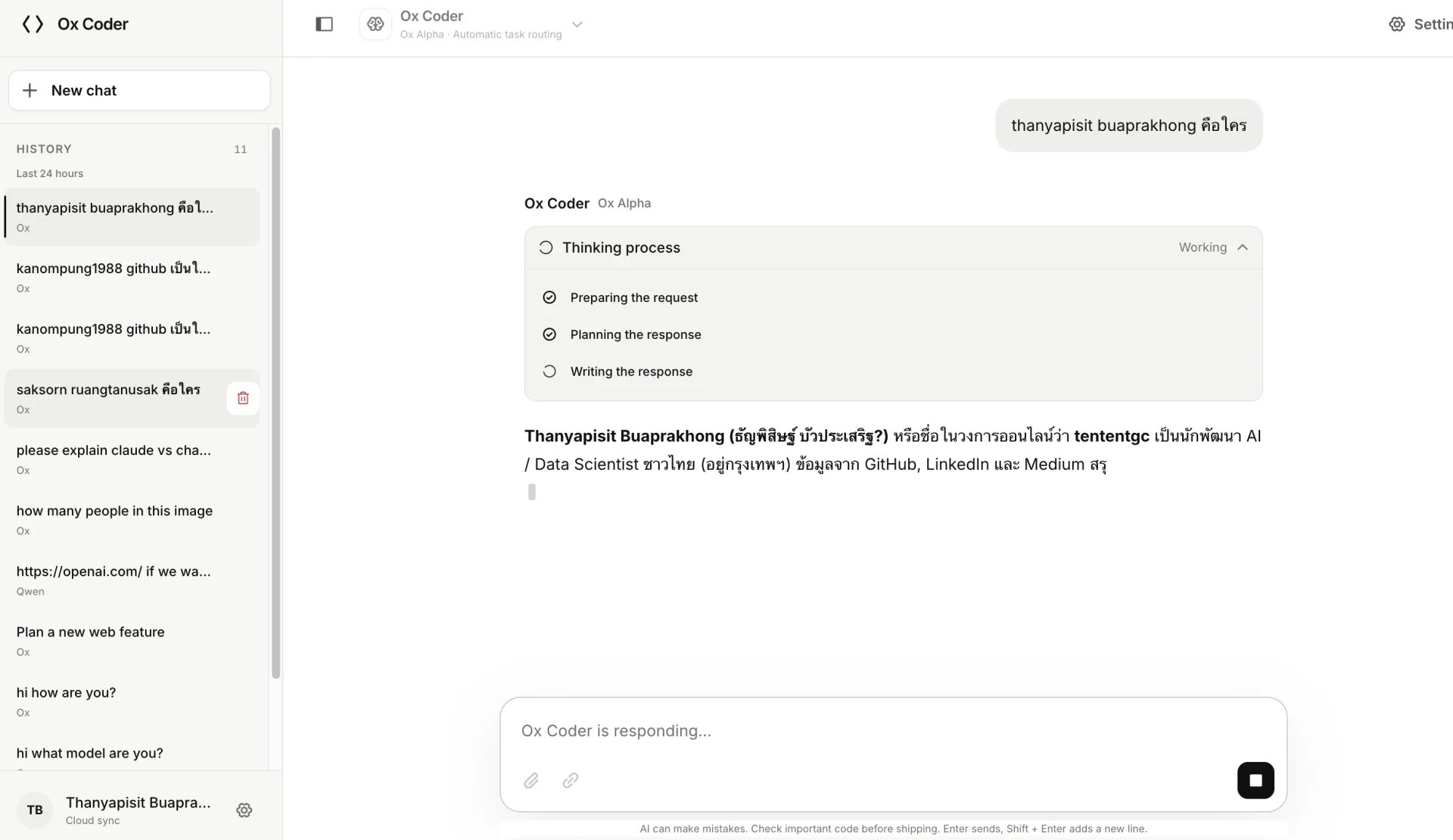
Ox Coder is a production AI coding workspace designed around a simple division of responsibility: the user chooses the model, while the system chooses the work method and relevant tools. It combines a quiet public product experience with an authenticated chat workspace, streamed agent activity, multimodal attachments, current web evidence, MCP and custom actions, cross-device history, and operational safeguards for a resource-constrained deployment.
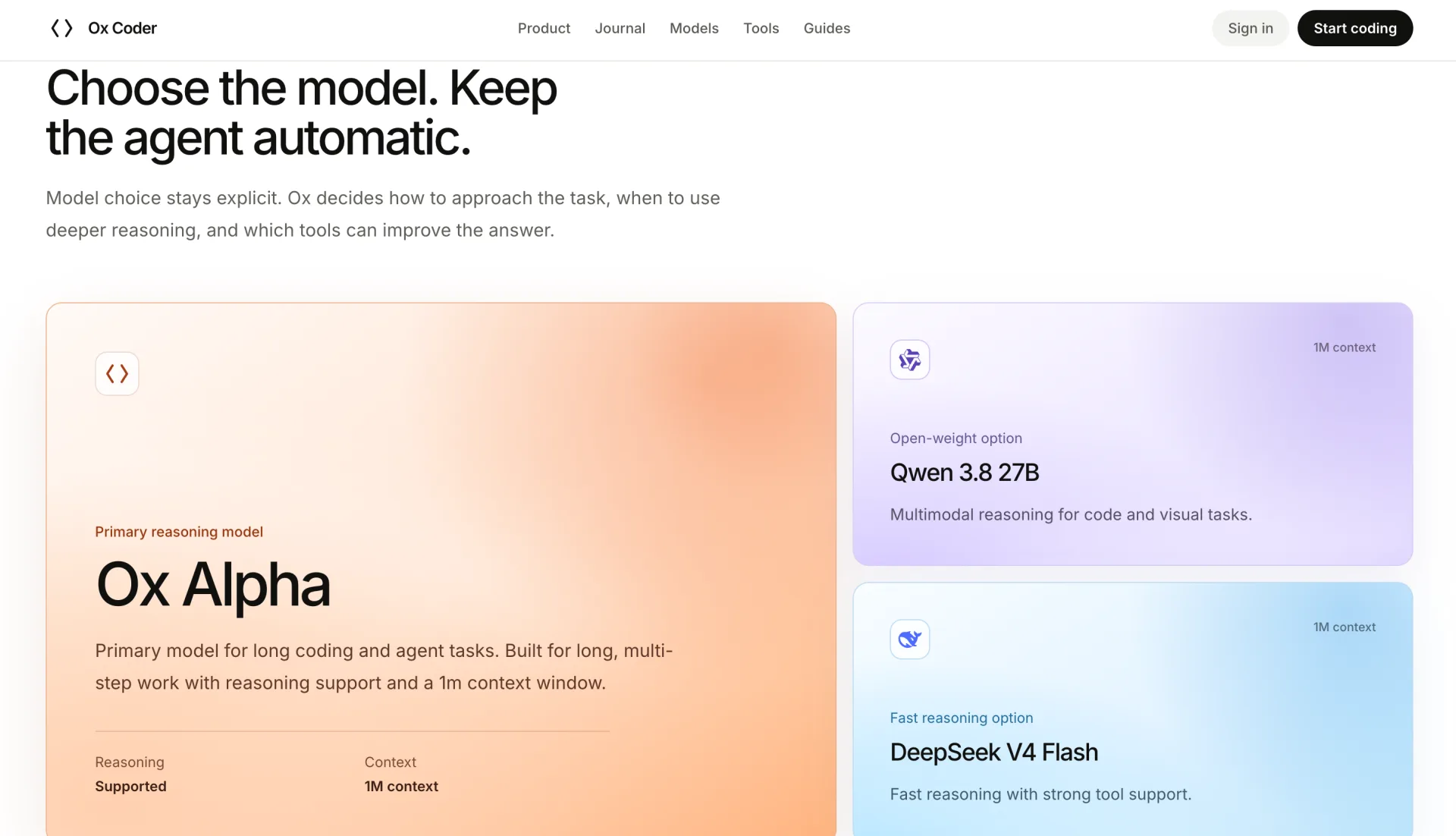
- Keeps model selection explicit while routing the work method automatically, so users retain provider choice without managing agent orchestration.
- Supports up to three multimodal attachments per turn and exposes the active fallback model instead of hiding provider changes.
- Restricts remote tools and readers to public HTTPS targets with DNS and IP checks, redirect limits, timeouts, response caps, and untrusted-content handling.
- A 500-request live load run across 100 concurrent clients returned 500 HTTP 200 responses, with about 1.26-second p95 latency and 211 MB memory use on a Render Starter instance.
Product flow
How it works
- 01
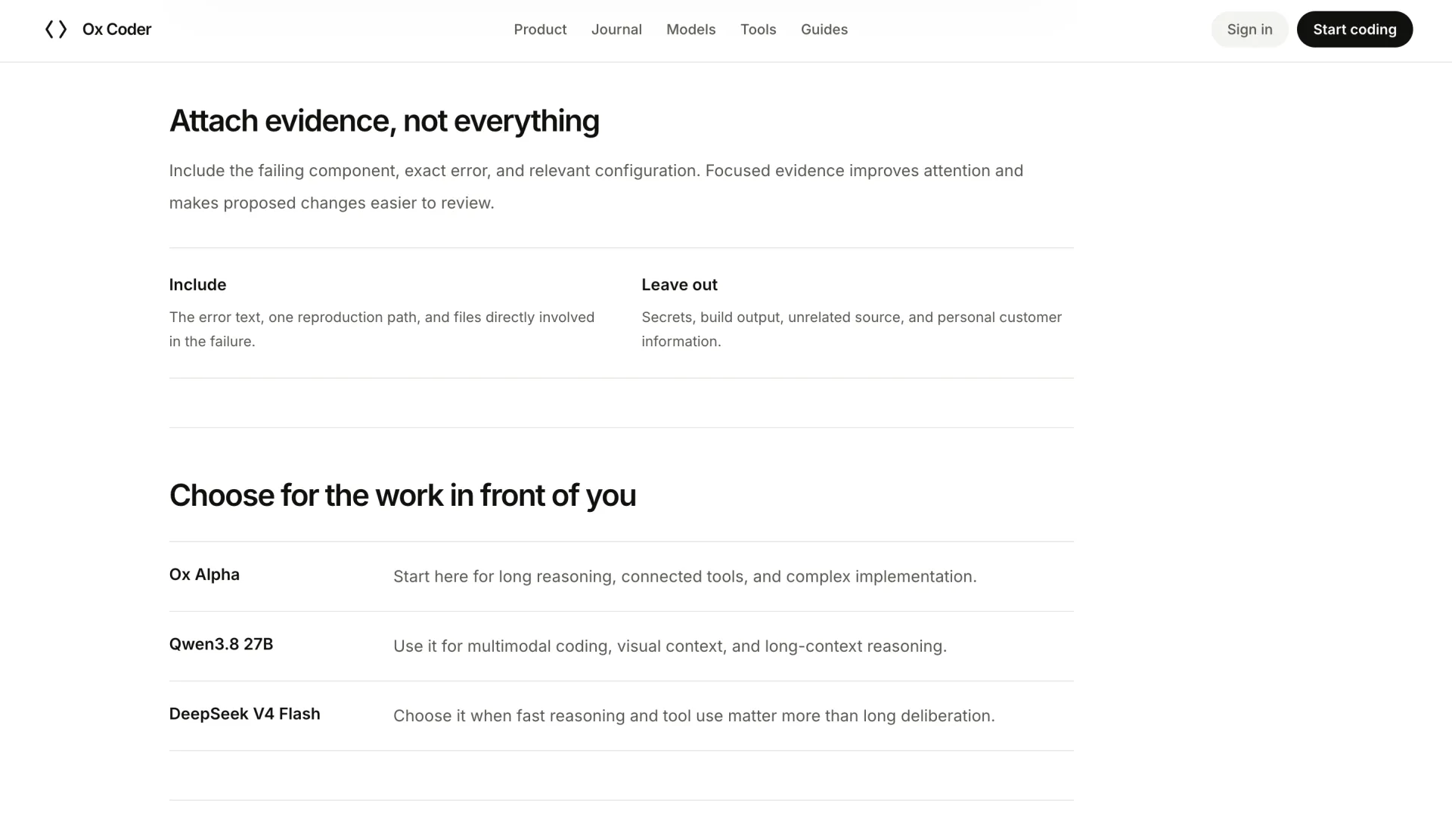
A signed-in user selects Ox Alpha, Qwen 3.8 27B, or DeepSeek V4 Flash, then submits a coding request with optional text, image, PDF, video, or public-link context supported by that model.
- 02
The chat route validates the session, applies per-user rate and weighted capacity limits, checks the request schema and attachments, then infers a General, Build, Debug, Review, Tests, or Architecture work method.
- 03
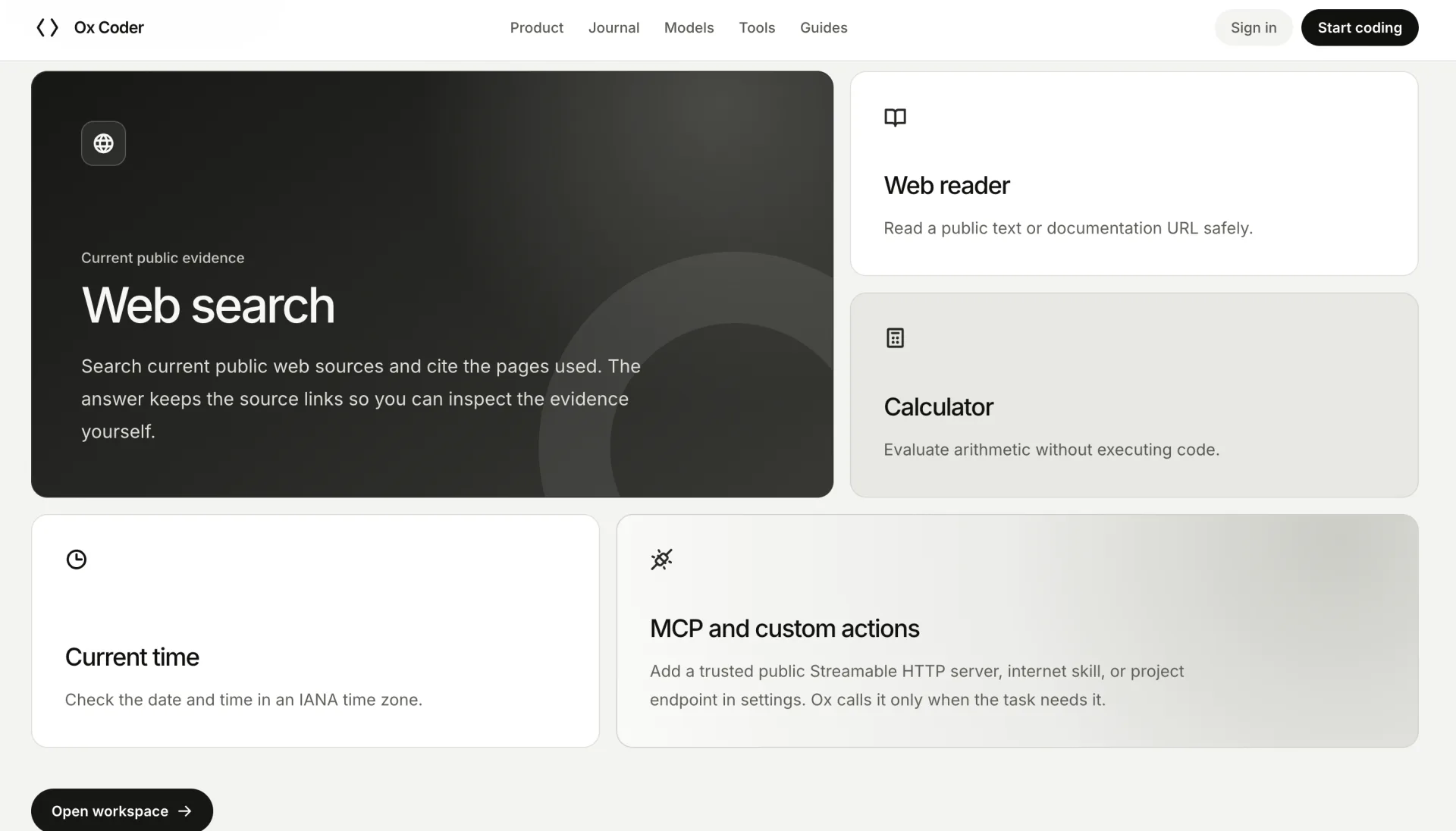
Built-in tools, public Streamable HTTP MCP servers, custom HTTPS actions, and internet-hosted skills are prepared only when they can help the current task.
- 04
OpenRouter streams reasoning activity, tool calls, text, notices, and completion events as newline-delimited JSON. Compatible fallback routes preserve the required input modality and remain visible to the user.
- 05
The browser renders each event incrementally and saves the completed conversation. PostgreSQL provides account-level, cross-device history when configured, with browser storage as the deliberate fallback.
Development approach
How the work was organized
The implementation moved from product control and stream contracts to bounded integrations, resilient state, and production verification.
Frame the control model
Define one clear product rule: the person chooses the model, while Ox selects the task method and decides when tools improve the answer.
Specify the stream contract
Align the browser and API around typed request schemas plus NDJSON events for activity, tool results, text, notices, errors, and completion.
Add bounded capabilities
Start with deterministic built-in tools, then add public MCP, custom actions, and internet skills behind strict URL, redirect, timeout, and size controls.
Make state resilient
Layer account-scoped PostgreSQL synchronization over immediate browser persistence, and make model fallback behavior visible instead of silent.
Verify and operate
Test schemas, routing, attachments, tools, MCP, stream rendering, settings, storage identity, rate limits, and capacity before the production build and Render release.
System design
How it was built
Built the public product, journal, guides, authentication flow, and responsive coding workspace in Next.js 16 and React 19, with model selection, persistent history, attachments, settings, Markdown responses, and visible generation activity.
Designed the agent runtime around OpenRouter streaming, automatic task methods, modality-aware model fallback, four built-in evidence tools, public MCP connections, custom HTTPS actions, and internet-hosted Markdown skills.
Hardened persistence and deployment with Auth.js, hashed user identities, PostgreSQL chat ownership, browser fallback, SSRF-resistant URL access, schema and content caps, rate limiting, weighted generation admission, health checks, and Render deployment guidance.
System architecture
Structure and trust boundaries
The application owns authentication, validation, routing, and persistence. Models and remote tools remain conditional external services.

Public product surface
Landing, models, tools, journal, guides, legal pages, SEO metadata, public advertising placements, and the route into the workspace.
Authenticated workspace
Responsive chat, model menu, multimodal attachments, settings, chat history, Markdown rendering, sponsor interlude, and incremental stream state.
Agent and integration layer
Request validation, automatic task methods, OpenRouter model and modality fallback, built-in tool execution, MCP, custom tools, and internet skills.
Persistence and operations
Auth.js sessions, PostgreSQL chat storage, local fallback, rate and capacity controls, health reporting, and a single Render web-service deployment.